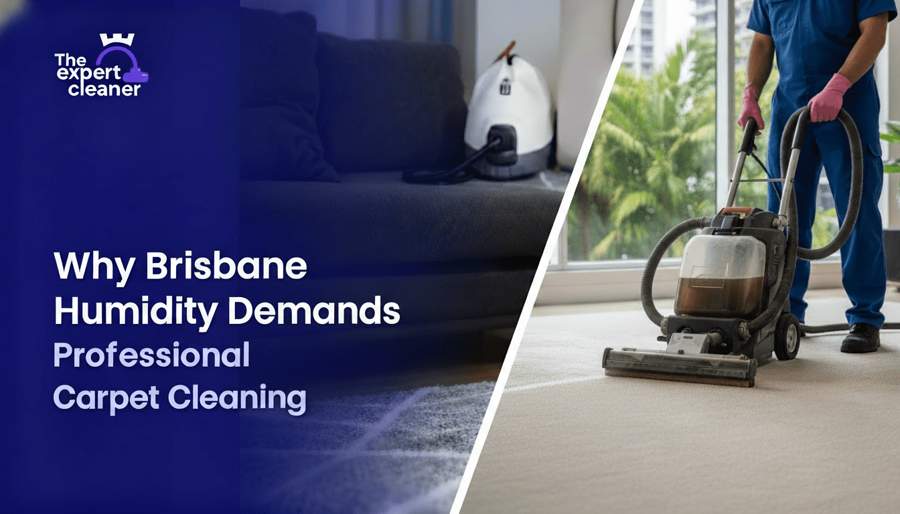
Living in Brisbane means enjoying beautiful subtropical weather year-round, but our city’s characteristic humidity brings unique challenges for homeowners—particularly when it comes to carpet care. With average humidity levels hovering around 67-75% during summer months and rarely dropping below 62% even in winter, Brisbane’s climate creates the perfect breeding ground for mould spores, dust mites, bacteria, and allergens that thrive in carpet fibres.
Your carpets are more than just comfortable flooring—they act as giant filters, trapping airborne particles, moisture, and contaminants daily. In Brisbane’s humid environment, these porous fibres absorb moisture from the air continuously, creating conditions where a seemingly clean carpet can harbour health hazards invisible to the naked eye. That musty smell after a rainy week? The persistent allergies your family experiences indoors? The discolouration appearing on your living room carpet? These are all symptoms of Brisbane’s humidity taking its toll on your home.
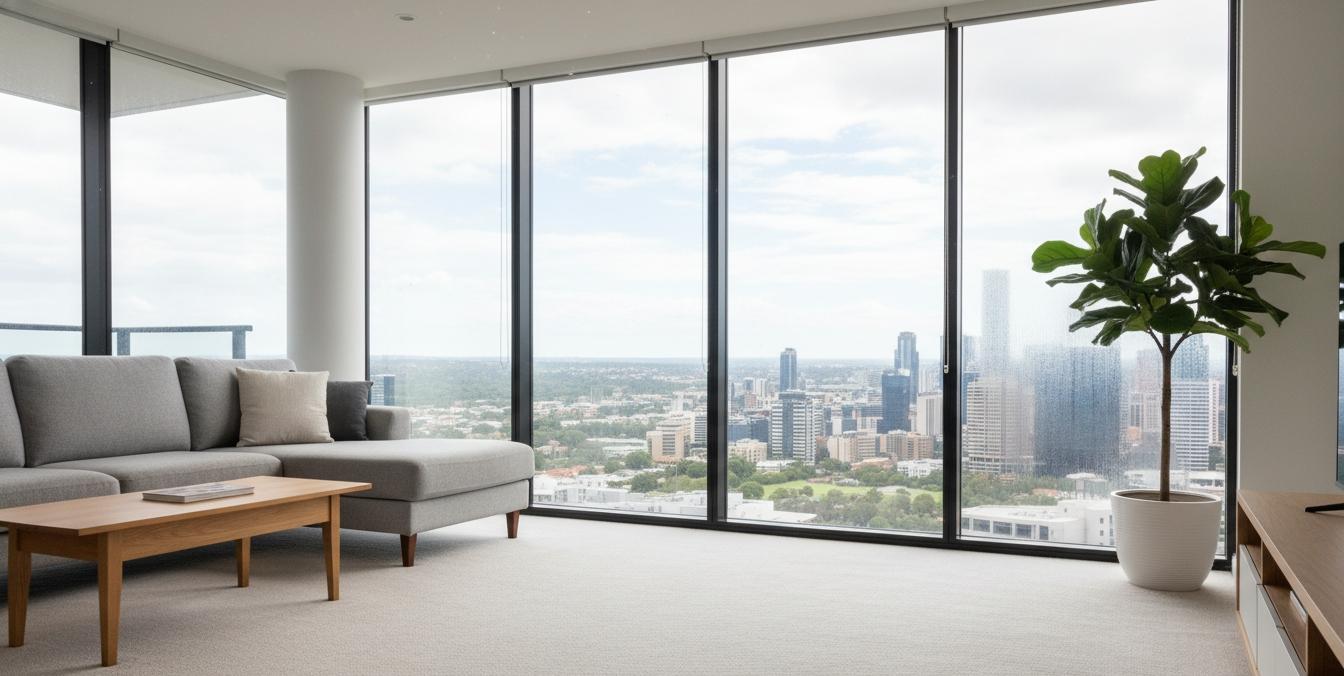
At The Expert Cleaner, we understand Brisbane’s unique climate challenges intimately. Our professional steam cleaning services using eco-friendly, non-toxic solutions are specifically designed to combat the moisture, mould, and allergen issues that plague Brisbane carpets across suburbs from West End to Paddington, Fortitude Valley to Indooroopilly. This comprehensive guide explains exactly how Brisbane’s humidity affects your carpets, why DIY cleaning often makes problems worse, and how professional steam cleaning protects your family’s health and your flooring investment.
How Brisbane’s Subtropical Climate Affects Your Carpets
Understanding Brisbane’s Humid Environment
Brisbane’s location in subtropical Queensland gives us warm temperatures year-round combined with significant moisture in the air. According to meteorological data, Brisbane experiences:
- Annual average humidity: 66.8%
- Summer humidity (Dec-Feb): 67-75%
- Peak humidity month: February at 75%
- Winter humidity (Jun-Aug): 62-66%
- Summer rainfall: 360-427mm over three months
This consistent high humidity means your carpets are constantly absorbing moisture from the air—even on days when it’s not raining. Unlike homes in drier climates like Adelaide or Perth where carpets remain relatively dry between cleanings, Brisbane carpets exist in a perpetually damp environment that accelerates deterioration and microbial growth.
Why Carpets Are Particularly Vulnerable in Brisbane
Carpets are porous, absorbent materials designed with thousands of individual fibres providing cushioning and insulation. While this makes them comfortable underfoot, these same characteristics make them moisture traps in humid climates:
Fibre Structure:
Modern carpet fibres (nylon, polyester, wool) have microscopic spaces that readily absorb and retain moisture from humid air. In Brisbane’s 70%+ humidity, these fibres can hold significant water content without feeling obviously wet to touch.
Carpet Backing and Underlay:
Beneath visible carpet fibres lies backing material and foam or rubber underlay—both highly absorbent. Moisture penetrates these layers through regular foot traffic, spills, and atmospheric humidity, creating damp environments hidden from view.
Poor Airflow:
Carpets sit flush against floors with minimal air circulation underneath. In Brisbane homes with limited cross-ventilation—particularly bedrooms, home offices, and rooms without ceiling fans—trapped moisture has nowhere to escape.
Heat + Humidity = Perfect Storm:
Brisbane’s warm temperatures (averaging 20-30°C) combined with high humidity create ideal conditions for rapid microbial proliferation. Organisms that would grow slowly in cooler, drier climates multiply exponentially in Brisbane’s environment.
The Hidden Dangers of Humid Carpet Fibres
Mould Growth and Spore Development
Mould represents the most serious threat to Brisbane carpets exposed to persistent humidity. Mould spores are naturally present in all air, but they remain dormant until conditions are right for growth:
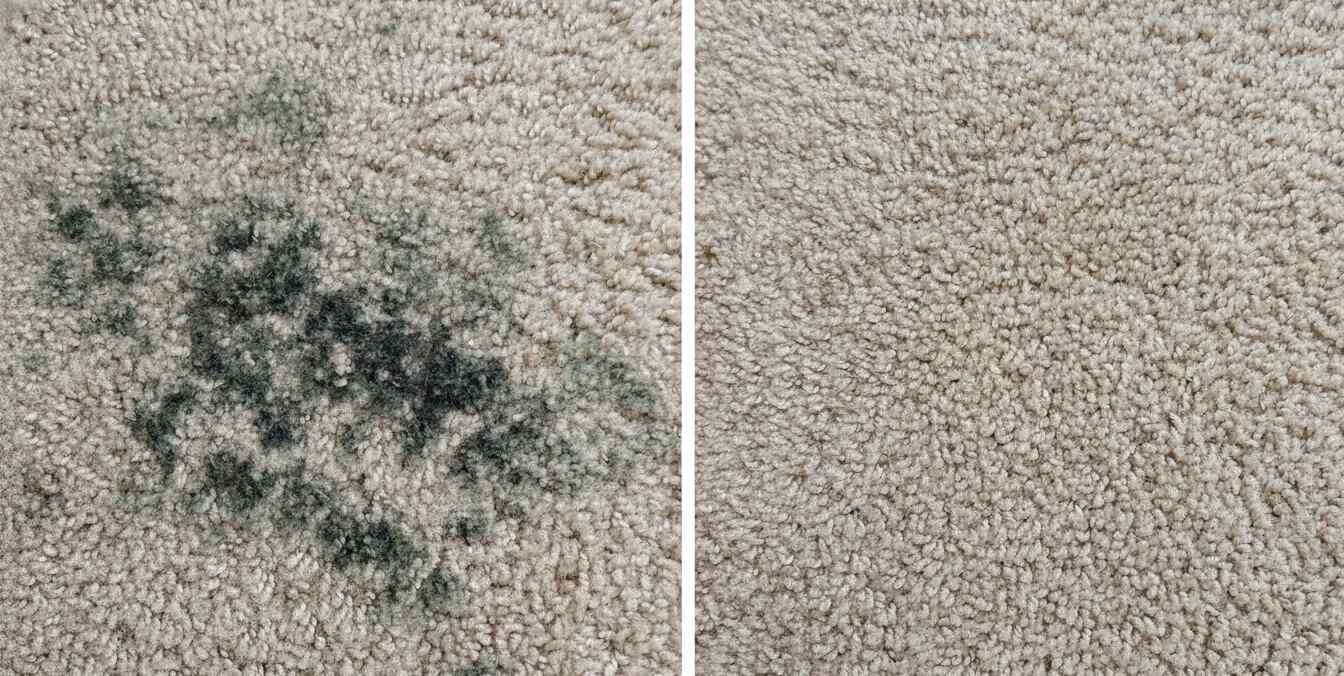
Mould Growth Requirements (All Present in Brisbane Carpets):
- Moisture: ✓ Brisbane’s 67-75% humidity provides constant moisture
- Warmth: ✓ Brisbane’s 20-30°C temperatures ideal for growth
- Organic material: ✓ Carpet fibres, skin cells, dirt provide food source
- Time: ✓ Undisturbed areas allow colonization within 24-48 hours
Once mould establishes in carpet fibres, it produces several problems:
Health Impacts:
- Respiratory issues and breathing difficulties
- Aggravated asthma and chronic allergies
- Skin irritation and rashes
- Eye irritation and sinus congestion
- Immune system challenges for vulnerable individuals[
Structural Damage:
- Carpet discolouration (green, black, brown patches)
- Fibre degradation and weakening
- Musty, persistent odours that permeate rooms
- Spread to walls, skirting boards, and subflooring if untreated
Why It’s Worse in Brisbane:
The city’s combination of rainfall (especially the 147mm average in February) and humidity means carpets rarely dry completely between moisture exposure events. This creates cumulative dampness where mould thrives continuously rather than in isolated incidents.
Dust Mites Thrive in Brisbane’s Climate
While invisible to the naked eye, dust mites are microscopic arachnids that inhabit virtually all Brisbane homes, with carpets being their preferred habitat: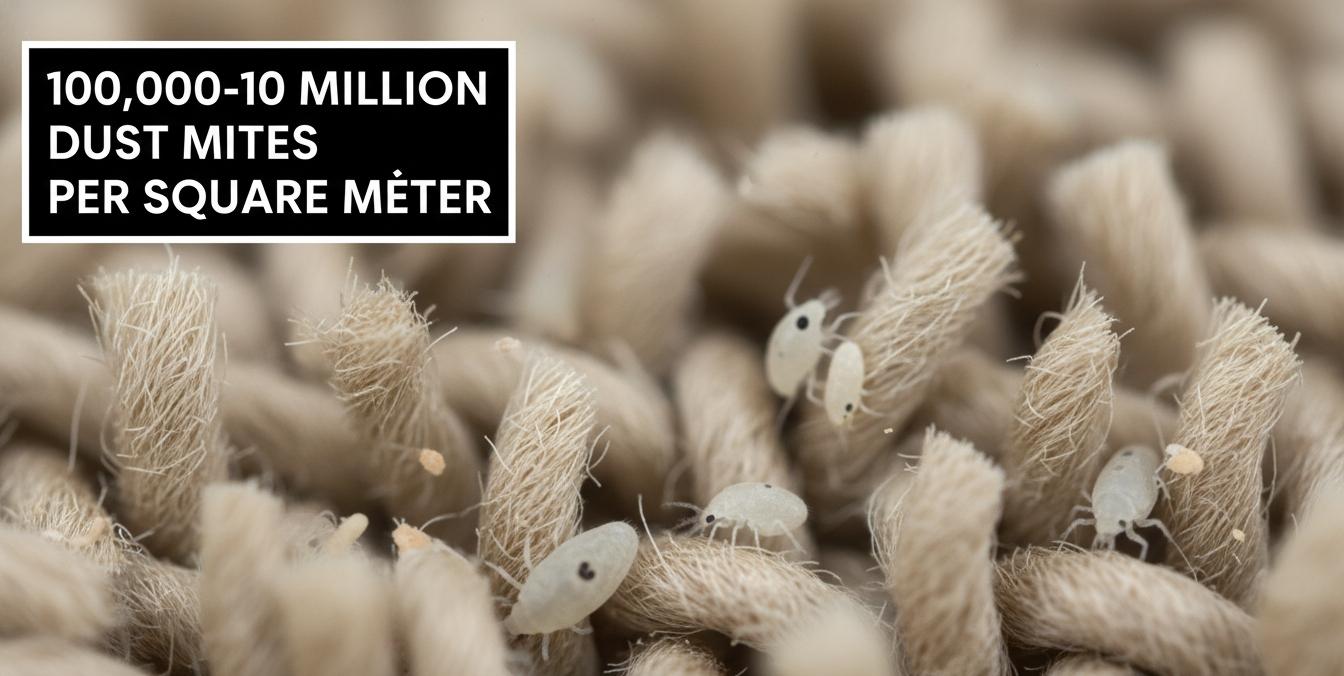
Brisbane’s Dust Mite Problem:
- Optimal conditions: Dust mites thrive at 70-80% humidity (Brisbane’s summer average: 71-75%)
- Population density: Average carpet can harbor 100,000-10 million dust mites per square meter
- Food source: Feed on dead human skin cells (humans shed 1.5 grams daily)
- Reproduction rate: Female dust mites lay 25-50 eggs monthly in ideal conditions
Health Consequences:
Dust mites themselves don’t bite or spread disease, but their fecal pellets and body fragments are potent allergens affecting Brisbane families:
- 80% of asthma sufferers are allergic to dust mite allergens[
- Trigger allergic rhinitis (sneezing, runny nose, itchy eyes)
- Contribute to eczema flare-ups, particularly in children
- Accumulate in carpets faster than regular vacuuming can remove
Bacterial Growth in Damp Carpets
Beyond mould and dust mites, Brisbane’s humid carpets become breeding grounds for various bacteria species:
Common Bacteria in Carpets:
- Staphylococcus aureus (including MRSA strains)
- E. coli from tracked-in contaminants
- Salmonella species from food spills
- Various soil bacteria from outdoor shoes
Amplification in Humidity:
Bacteria multiply rapidly in warm, moist environments. A single bacterium can become 8 million bacteria in 24 hours under ideal conditions—conditions Brisbane carpets provide year-round. Regular foot traffic grinds bacteria deeper into carpet backing where standard vacuuming can’t reach, creating persistent contamination.
Protect Your Brisbane Family from Humidity-Related Carpet Hazards
Don’t let mould, dust mites, and bacteria thrive in your carpets. The Expert Cleaner offers professional steam cleaning using eco-friendly, non-toxic methods across all Brisbane suburbs.
Book Your Carpet Assessment Today ›
Why Dry Carpet Cleaning Fails in Brisbane’s Humidity
The Dry Cleaning Misconception
Many Brisbane homeowners are attracted to “dry” carpet cleaning methods, believing they offer a solution to our humidity challenges. However, these methods often create more problems than they solve in our subtropical climate:
Inadequate Moisture Control
The Humidity Trap:
- Dry cleaning methods still use moisture-activated compounds or low-moisture systems
- Brisbane’s 67-75% humidity prevents proper drying even with “low-moisture” approaches
- Residual moisture combines with atmospheric humidity, creating ideal mould conditions
Extended Dampness Issues:
- “Dry” methods can leave carpets damp for 12-24 hours in Brisbane’s climate
- This extended moisture exposure occurs in the exact humidity range where mould thrives (70-80%)
- Hidden moisture penetrates carpet backing where it can’t evaporate properly
Limited Cleaning Effectiveness
Insufficient Contaminant Removal:
- Dry compounds cannot effectively dissolve and remove humidity-attracted contaminants
- Dust mites, mould spores, and bacteria remain embedded in fibres
- Methods fail to reach deep into carpet backing where moisture accumulates
Temperature Limitations:
- Dry cleaning operates at room temperature, missing the critical 60°C+ needed to:
- Kill dust mites (die at 60°C)
- Destroy mould spores and bacteria
- Break down humidity-caused odours
Residue Problems in Humid Conditions
Compound Accumulation:
- Dry cleaning compounds absorb atmospheric moisture
- Become sticky in Brisbane’s humidity, attracting more dirt and allergens
- Create breeding grounds for bacteria and mould
Moisture Lock-In:
- Some dry compounds form moisture barriers that trap humidity within carpet fibres
- Prevent natural evaporation in already humid conditions
- Accelerate fibre degradation and colour fading
The Brisbane-Specific Consequences
Rapid Mould Development:
- Even “low moisture” methods provide enough dampness for mould growth in 24-48 hours
- Brisbane’s warm temperatures (20-30°C) accelerate microbial activity
- Musty odours become permanently embedded in fibres
Allergen Proliferation:
- Incomplete removal of dust mite allergens and faecal matter
- Humidity-reactive cleaning residues trigger allergic responses
- Air quality worsens as contaminants become airborne
Structural Damage Risks:
- Residual moisture migrates to subflooring in high humidity
- Timber floors warp and swell beneath apparently “dry” carpets
- Adhesive breakdown in carpet backing systems
The Humidity Reality
Brisbane’s consistent 67-75% humidity means any cleaning method that leaves even minimal moisture creates long-term problems. What appears “dry” in other climates remains dangerously damp in our subtropical environment, making professional steam cleaning with proper extraction the only reliable solution for Brisbane homeowners.
Professional Steam Cleaning: The Brisbane Solution
Hot Water Extraction Explained
Professional steam cleaning (technically called hot water extraction) is universally recognized as the most effective carpet cleaning method, particularly crucial in Brisbane’s challenging climate:
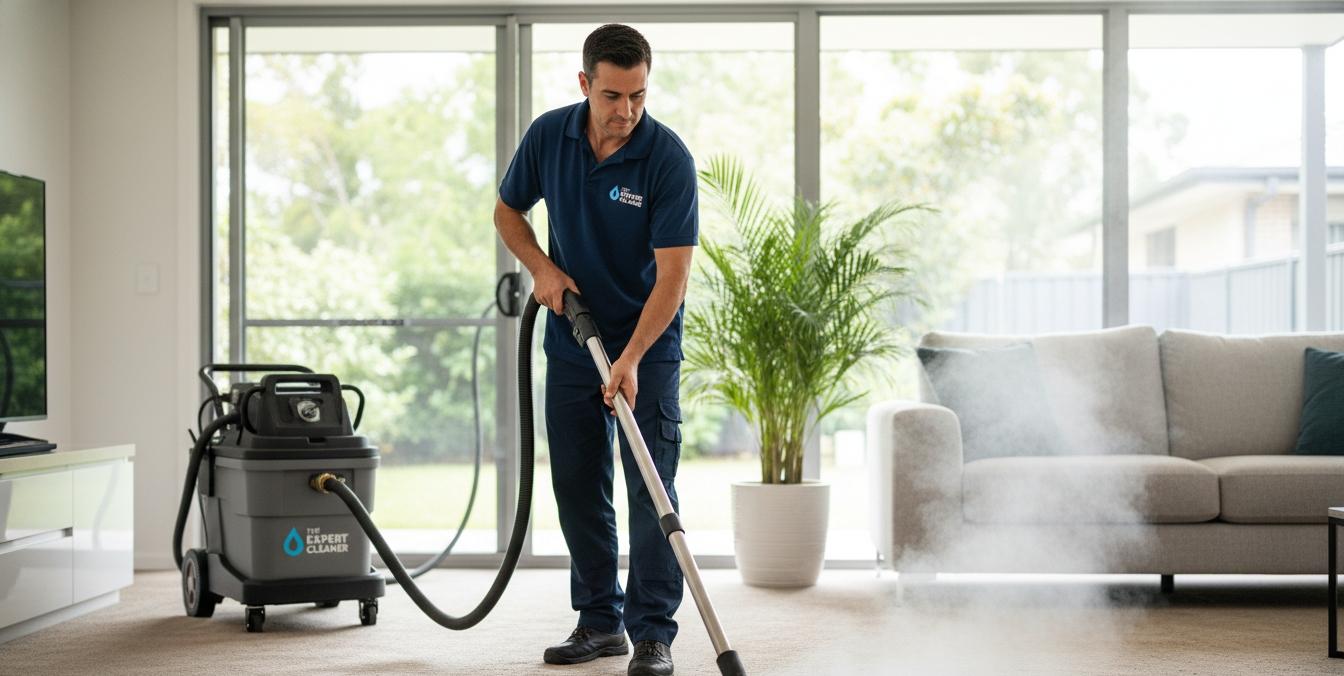
The Steam Cleaning Process:
Step 1: Pre-Treatment
- Professional-grade, eco-friendly pre-treatment solution applied to carpet
- Breaks down dirt, oils, allergens, and contaminants at molecular level
- Non-toxic formulations safe for Brisbane families with children and pets
Step 2: High-Temperature Steam Injection
- Water heated to 80-95°C injected deep into carpet fibres under high pressure
- Heat kills 99.9% of dust mites, bacteria, mould spores, and pathogens
- Loosens embedded dirt, allergens, and contaminants from carpet backing
Step 3: Powerful Extraction
- Industrial vacuum systems extract 95-97% of moisture and contaminants
- Removes dirt, allergens, dead dust mites, bacteria, and cleaning solution
- Leaves carpets only slightly damp (dry within 3-6 hours even in Brisbane humidity)
Step 4: Deodorization (Optional)
- Eco-friendly deodorizers neutralize odours at source
- Antimicrobial treatments prevent mould regrowth for months
- Particularly beneficial for Brisbane homes battling musty smells
High-Temperature Extraction Methods
The temperature of professional steam cleaning is critical to its effectiveness in Brisbane’s environment:
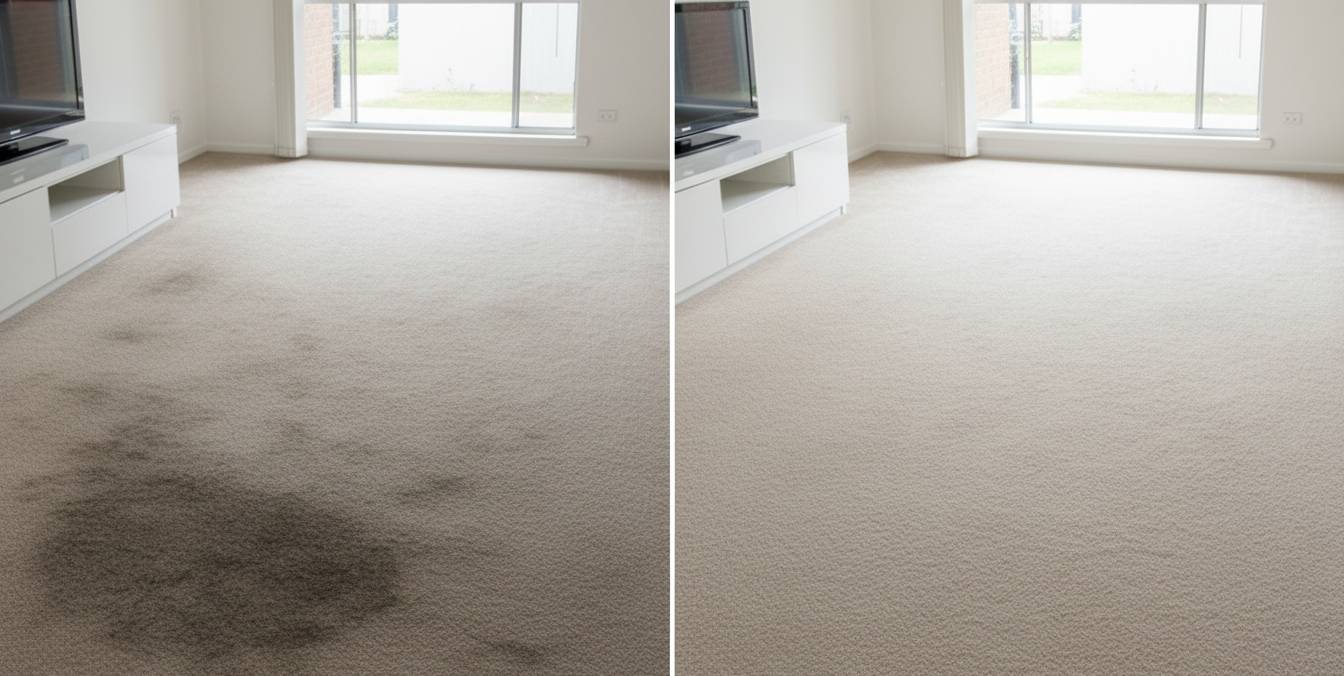
Why 80-95°C Matters:
- Dust mite elimination: Dust mites die at temperatures above 60°C
- Mould spore destruction: High heat kills active mould and dormant spores
- Bacterial sterilization: Most bacteria cannot survive above 75°C
- Deep penetration: Hot water penetrates carpet backing more effectively, reaching contaminants DIY methods miss
The Expert Cleaner’s professional steam cleaning systems maintain these high temperatures throughout the cleaning process, delivering sterilization-level cleaning that protects Brisbane families from humidity-related health hazards.
Rapid Drying Technology for Brisbane Conditions
Professional equipment addresses Brisbane’s humidity challenge with rapid drying technology:
Industrial Extraction Power:
Professional truck-mounted or portable extraction units generate suction equivalent to 5-10 household vacuum cleaners, removing 95-97% of moisture in a single pass.
Air Movers (When Needed):
For particularly humid days or heavily saturated areas, professionals deploy high-velocity air movers creating rapid air circulation that accelerates evaporation even in Brisbane’s humid air.
Strategic Timing:
Professional cleaners understand Brisbane’s climate patterns, recommending cleaning during lower-humidity periods (autumn and spring, when humidity averages 64-71%) for fastest drying.
Experience the Brisbane Difference with Professional Steam Cleaning
Our hot water extraction method eliminates mould, dust mites, and allergens while being completely safe for your family and pets. Specifically designed for Brisbane’s humid climate.
How Often Should Brisbane Residents Clean Carpets Professionally?
Frequency Recommendations Based on Brisbane’s Climate
Unlike drier Australian cities where annual professional cleaning suffices, Brisbane’s humid subtropical climate demands more frequent attention:
General Brisbane Households:
- Every 6-9 months for homes with average foot traffic and no special circumstances
- More frequent than Adelaide, Perth, or Canberra due to humidity, mould, and dust mite concerns
High-Traffic Brisbane Homes:
- Every 4-6 months for busy households with children, multiple occupants, or frequent visitors
- Living rooms, hallways, and stairs wear faster and accumulate contaminants more rapidly
Brisbane Homes with Pets:
- Every 3-6 months depending on pet size, shedding, and outdoor access
- Pets track moisture, dirt, and allergens indoors; their dander combines with humidity creating ideal bacteria conditions
Allergy and Asthma Sufferers:
- Every 3-4 months for Brisbane families with respiratory sensitivities
- Regular professional cleaning dramatically reduces dust mite allergens and mould spores
Rental Properties (End of Lease):
- Professional cleaning required for bond return in most Brisbane rental agreements
- Essential after tenant occupancy to restore carpets to acceptable condition
Seasonal Considerations for Brisbane Carpet Care
Summer (December-February):
Brisbane’s most challenging carpet season with peak humidity (71-75%) and heavy rainfall (360-427mm):
- Consider professional cleaning before summer (October-November) to enter humid season with clean, dry carpets
- May require additional cleaning mid-summer if mould or odours develop
Autumn (March-May):
Ideal cleaning season with lower humidity (64-71%) and reduced rainfall (100-167mm):
- Carpets dry faster in these conditions
- Prepares home for upcoming winter and removes accumulated summer contaminants
Winter (June-August):
Brisbane’s mildest season with lowest humidity (62-66%):
- Good time for professional cleaning with fastest drying times
- However, cooler temperatures combined with dampness can still support mould in poorly ventilated rooms
Spring (September-November):
Second-best cleaning season with moderate humidity (64-69%) and warming temperatures:
- Excellent preparation for approaching summer humidity
- Removes allergens before warmer weather intensifies dust mite populations
The Indoor Air Quality Connection of Carpet
How Carpets Impact Brisbane Home Air Quality
Your carpets function as your home’s largest air filter, trapping airborne particles with every footstep and air current passing through fibres:
What Brisbane Carpets Trap:
- Pollen from Brisbane’s abundant native vegetation
- Dust and soil particles tracked from outdoors
- Skin cells, hair, and pet dander
- Outdoor pollutants and vehicle emissions
- Cooking oils and household aerosols
- Mould spores from humid air
In Brisbane’s environment, carpets can trap up to 200,000 bacteria per square inch and accumulate their weight in dirt annually if not professionally cleaned. Regular foot traffic and indoor air movement release these contaminants back into breathable air, affecting family health.
Professional Cleaning Restores Air Quality
Health Benefits of Professional Steam Cleaning:
- Allergen reduction: Removes 95-99% of dust mite allergens, reducing allergic reactions
- Respiratory improvement: Eliminates mould spores, bacteria, and particulates affecting breathing
- Asthma management: Significantly reduces asthma triggers accumulated in carpet fibres
- Odour elimination: Removes bacteria causing musty smells, improving indoor freshness
- Chemical-free environment: The Expert Cleaner’s eco-friendly, non-toxic solutions avoid adding harmful chemicals to your Brisbane home
Studies show professional carpet cleaning can improve indoor air quality by 30-50%, particularly beneficial for Brisbane’s humid environment where carpets accumulate contaminants rapidly.
Choosing Professional Steam Cleaning for Brisbane Homes
Why The Expert Cleaner’s Approach Works in Brisbane’s Climate
At The Expert Cleaner, we’ve specialized in Brisbane’s unique carpet care challenges, developing approaches specifically designed for our subtropical environment:
Climate-Adapted Techniques:
- Professional steam cleaning optimized for Brisbane’s 67-75% humidity conditions
- Rapid extraction removing 95-97% of moisture for fast 3-6 hour drying
- High-temperature treatment (80-95°C) eliminating Brisbane’s mould, dust mites, and bacteria
Eco-Friendly, Non-Toxic Solutions:
- Plant-based cleaning agents safe for Brisbane families, children, and pets
- No harsh chemicals that damage fibres or leave toxic residues
- Biodegradable formulations protecting Brisbane’s environment
Comprehensive Service:
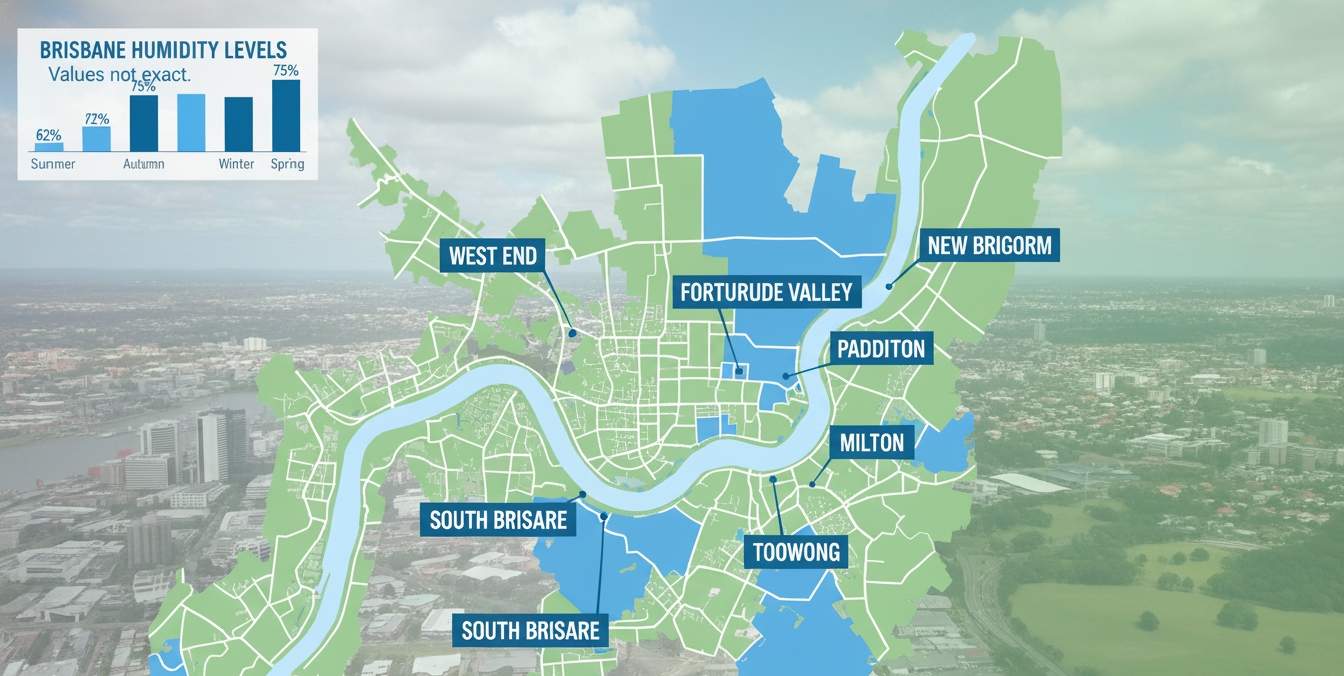
- Serving all Brisbane suburbs including West End, South Brisbane, Fortitude Valley, Paddington, New Farm, Milton, Toowong, Indooroopilly, Woolloongabba, and surrounding areas
- Fast same-day service available for urgent carpet cleaning needs
- Professional assessment identifying humidity-related problems before cleaning begins
our services Beyond Carpets:
Our expertise extends to complete home steam cleaning services:
- Couch and upholstery cleaning Specialized cleaning for all fabric furniture, effectively removing embedded allergens and bacteria to refresh your living space.
- Mattress cleaning Promote a healthier sleep environment by eliminating dust mites and other contaminants, directly improving your sleep hygiene.
- Curtain cleaning We expertly refresh your window treatments, removing the built-up dust and moisture absorbed from Brisbane’s humid climate.
- Rug cleaning Professional restoration of your valuable area rugs, lifting away ground-in dirt and combating the effects of moisture.
- Carpet Repair From burns to tears and stretching, we fix damage to extend the life and appearance of your carpets.
- Flood Damage Restoration Our rapid-response service addresses water damage, extracting water and thoroughly drying affected areas to prevent mould and structural issues.y Without Hard Guarantees:
Our Commitment to Quality
confident in our professional steam cleaning results and work diligently to exceed Brisbane homeowner expectations. While we can’t make absolute guarantees about specific outcomes due to varying carpet conditions, materials, and existing damage, our experienced technicians provide honest assessments and deliver the highest quality cleaning Brisbane’s climate demands.
Protect Your Brisbane Home Today
Beat humidity with professional steam cleaning
Our Service Areas
Brisbane CBD • Brisbane Northside • Caboolture • Redcliffe
Brisbane Southside • Ipswich • Wynnum • Western Suburbs • Gold Coast
FAQs
Popular Questions
How does Brisbane’s humidity affect my carpets differently than other cities?
Brisbane’s 67–75% humidity and warm 20–30°C climate keep carpets damp, promoting rapid mould growth, dust mites, and bacteria. Unlike drier cities, Brisbane carpets deteriorate faster and develop odours, so professional steam cleaning every 6–9 months is recommended.
Why do my Brisbane carpets smell musty after rain or in summer?
Musty odours occur when mould and bacteria grow in damp carpet fibres due to high humidity. Vacuuming only masks smells; professional steam cleaning at 80–95°C kills microbes and removes odours at the source.
How often should Brisbane homeowners get carpets professionally cleaned?
Every 6–9 months for general households, and every 3–6 months for homes with pets, children, allergies, or high foot traffic. Vacuuming alone cannot remove deep-seated mould, bacteria, or dust mites in Brisbane’s humid environment.
Can professional carpet cleaning remove mould already growing in my carpet?
Yes. Hot water extraction kills mould and spores, while antimicrobial treatments prevent recurrence. Severe mould affecting carpet backing or subfloor may need additional remediation or replacement.
Is eco-friendly carpet cleaning as effective as traditional chemical cleaning in Brisbane’s humid climate?
Absolutely. Eco-friendly steam cleaning uses plant-based solutions and high-temperature extraction to remove mould, bacteria, dust mites, and odours effectively—without harmful chemicals—making it safer for families and pets.
Brisbane’s 67–75% humidity and warm 20–30°C climate keep carpets damp, promoting rapid mould growth, dust mites, and bacteria. Unlike drier cities, Brisbane carpets deteriorate faster and develop odours, so professional steam cleaning every 6–9 months is recommended.
Musty odours occur when mould and bacteria grow in damp carpet fibres due to high humidity. Vacuuming only masks smells; professional steam cleaning at 80–95°C kills microbes and removes odours at the source.
Every 6–9 months for general households, and every 3–6 months for homes with pets, children, allergies, or high foot traffic. Vacuuming alone cannot remove deep-seated mould, bacteria, or dust mites in Brisbane’s humid environment.
Yes. Hot water extraction kills mould and spores, while antimicrobial treatments prevent recurrence. Severe mould affecting carpet backing or subfloor may need additional remediation or replacement.
Absolutely. Eco-friendly steam cleaning uses plant-based solutions and high-temperature extraction to remove mould, bacteria, dust mites, and odours effectively—without harmful chemicals—making it safer for families and pets.