How to Remove Wine Stains from Carpet: Expert Solutions for Guaranteed Removal
A glass of wine slips from your hand, tumbles to the floor, and spreads across your carpet in seconds. The panic that follows is real—wine stains are notorious for being among the most stubborn and difficult carpet stains to remove. Yet despite their fearsome reputation, wine stains don’t have to permanently damage your carpet.
The critical difference between permanent damage and complete stain removal often comes down to one thing: understanding what makes wine stains so challenging and acting with the right strategy. This comprehensive guide reveals why wine binds so aggressively to carpet fibres, walks you through proven removal techniques, and explains when professional intervention becomes necessary.
Why Red Wine Creates Such Stubborn Stains
The Chemistry of Wine Pigments and Tannins
Red wine’s staining power stems from two primary compounds: tannins and anthocyanins. Tannins are natural plant polyphenols found in grape skins that contribute to wine’s bitter taste and astringency. Anthocyanins are water-soluble pigments responsible for the deep red colour of wine—they’re the visible culprits behind the stain you see immediately after a spill.
When wine contacts carpet fibres, these pigments don’t simply sit on the surface. They penetrate the fibre’s outer layer and bond with the protein structure of the carpet material at a molecular level. This isn’t a simple case of “dirt” that can be wiped away—it’s a chemical interaction that transforms the spilled liquid into a permanent discoloration if left untreated.
How Tannins Bind to Carpet Fibres
The bonding process is particularly aggressive with tannins. These compounds have a molecular structure that naturally seeks out protein molecules, which carpet fibres contain in abundance. Once tannins encounter these proteins, they form cross-links—chemical bridges that firmly anchor the tannin molecules to the fibre structure. This explains why surface cleaning alone never fully addresses wine stains; the problem isn’t on the surface; it’s embedded within the fibre itself.
The Role of Alcohol in Wine Penetration
Wine’s alcohol content further complicates removal. Alcohol acts as a solvent that opens carpet fibres, allowing the pigmented molecules to penetrate deeper and more thoroughly. This is why wine—especially when it still contains liquid—travels so far and so quickly into carpet. The alcohol essentially “unlocks” the carpet’s protective barrier, giving tannins and anthocyanins direct access to fibre interiors.
Oxidation: Why Older Stains Become Darker
When wine dries, oxidation begins. The pigments in wine undergo chemical changes as they’re exposed to oxygen and light. This oxidation process darkens the stain considerably—a light pink spill can become a dark burgundy over hours or days. Once oxidation has occurred, the stain is more resistant to water-based cleaners because the pigment structure has fundamentally changed.
The Critical Golden Rule: Speed Is Everything
The first five minutes after a wine spill determine whether you’ll successfully remove the stain or battle a permanent mark for years. Here’s why:
Fresh wine hasn’t yet bonded completely to carpet fibres. It’s still largely liquid and can be absorbed rather than absorbed. The tannins are still in their original molecular state before oxidation has transformed them. The pigments haven’t yet penetrated the fibre’s interior.
Every minute that passes without action allows the wine to seep deeper into carpet layers, provides more time for tannins to bond with carpet proteins, and gives oxidation more opportunity to darken and set the colour. This is why professional carpet cleaners emphasize immediate response—delay transforms a removable spill into a stubborn stain.
Immediate Action: The First 10 Minutes
Step 1: Resist the Urge to Rub
Your instinct might be to grab a cloth and immediately scrub at the spill. Don’t. Rubbing does three harmful things simultaneously: it spreads the wine to previously unaffected carpet areas, it forces the liquid deeper into carpet fibres, and it damages carpet fibre texture by fraying and bending individual strands.
Step 2: Blot With White Towels Only
Grab clean white paper towels or white cloth towels and press firmly onto the spill. The white colour is crucial—dyed towels may transfer their dyes to the carpet, creating a secondary stain problem. Press downward with steady pressure for 5-10 seconds, then lift and replace with fresh towel sections.
Repeat this blotting process continuously, replacing towels as they become saturated. The goal is transferring wine from carpet to towel through absorption. Your blotting success determines how much wine is removed before deeper penetration occurs.
Step 3: Dilute With Cold Water—Never Hot
Pour a small amount of cold water directly onto the stained area. Cold water is essential because tannins dissolve more readily in cold conditions, and the cool temperature slows the oxidation process that darkens stains. Never use hot water—heat accelerates the bonding of pigments to fibres, potentially making the stain permanent.
Some homeowners swear by carbonated water (club soda) rather than plain cold water. The carbonation and mild acidity in club soda can provide modest additional help in dissolving tannins, though plain cold water is also effective.
Step 4: Continue Blotting the Diluted Wine
After adding water, blot the area thoroughly with fresh white towels. Work from the edges toward the center to prevent spreading. Repeat the add-water-then-blot sequence 5-6 times until fresh blotting towels come away nearly colourless.
This step-by-step dilution and removal is far more effective than aggressively attacking the stain with a single treatment. It gradually lifts the wine and dilutes what remains.
Intermediate Treatment: Immediate Follow-Up Solutions
After blotting away excess wine, the next phase determines whether the stain lifts completely or sets permanently.
Salt Absorption Method
Cover the damp stained area with a generous layer of table salt. Salt acts as a desiccant, drawing moisture from the carpet while absorbing the dissolved wine compounds. Leave the salt undisturbed for 10-15 minutes as it absorbs both liquid and pigment.
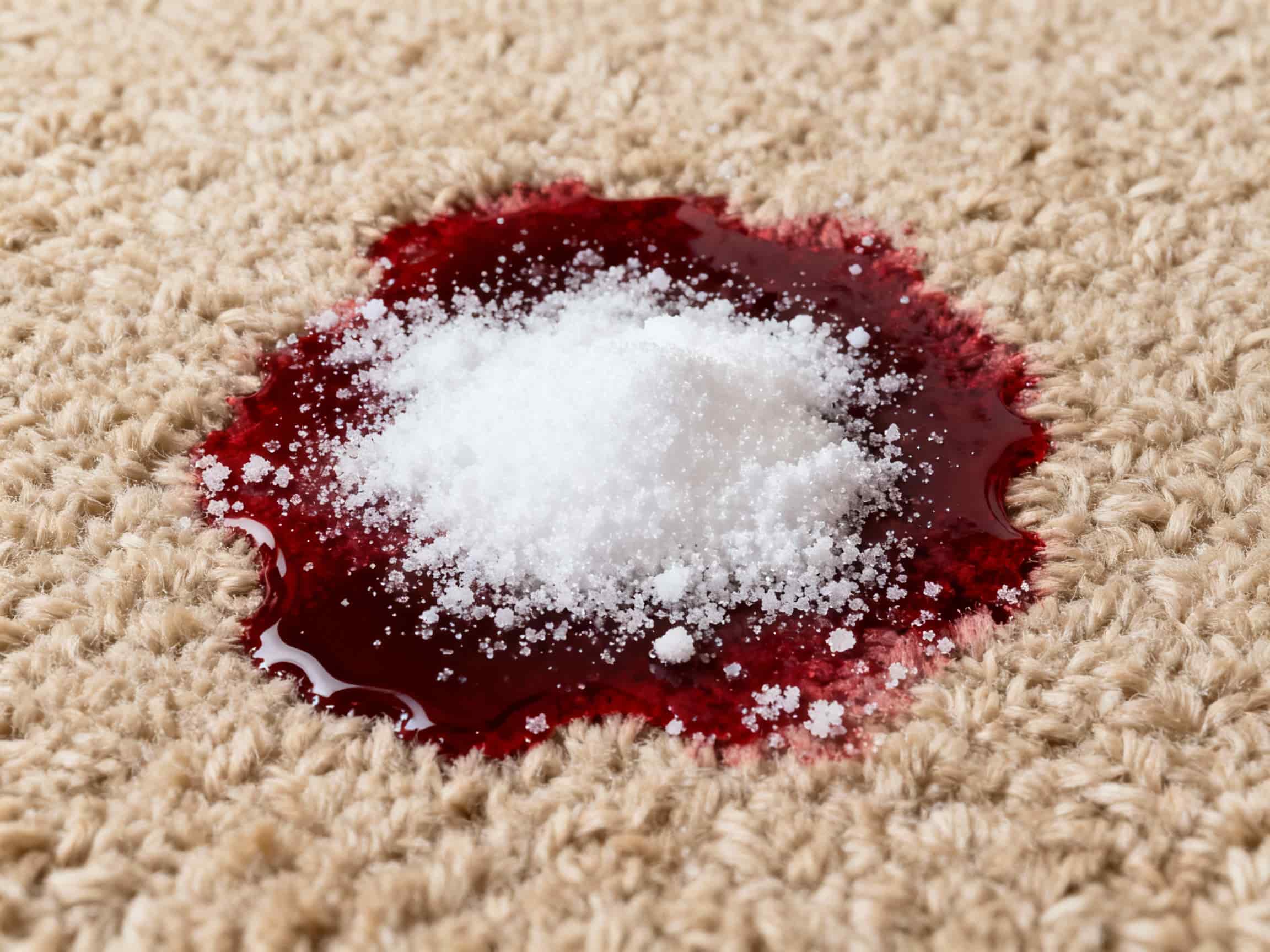
The salt will gradually turn pink or red as it absorbs wine. Once dry, vacuum the salt thoroughly. This method is effective for fresh spills because it removes liquid before the wine has time to oxidize and darken significantly.
Baking Soda Paste
For more stubborn immediate stains, create a paste by mixing three parts baking soda with one part water. Spread this paste over the stained area and allow it to dry completely—typically 4-6 hours or overnight. As it dries, the baking soda draws pigments from carpet fibres.
Once completely dry, vacuum thoroughly to remove all baking soda residue. The drying process is essential; vacuuming wet baking soda is ineffective and can damage your vacuum.
Advanced Treatment: For Stains That Persist
When immediate blotting and initial treatments don’t fully eliminate stains, these advanced methods provide additional removal potential.
Cold Water and Vinegar Solution
Combine equal parts white vinegar (never other vinegar types, which can stain) and cold water in a spray bottle. Spray the solution directly onto the stained area, ensuring the carpet is thoroughly saturated. Allow it to dwell for 20-30 minutes.
The acidity in vinegar helps break down the tannin-fibre bonds by creating a different chemical environment that destabilizes the attachment. After dwelling, blot thoroughly with white towels and repeat the process 2-3 times if the stain persists.
Important note: Some professional cleaners caution that vinegar can interact with wine pigments and potentially set stains. Test this method on an inconspicuous carpet area first to ensure it doesn’t worsen discoloration in your specific carpet type.
Hydrogen Peroxide for Light-Coloured Carpets
For light beige, cream, or white carpets, hydrogen peroxide (3% solution) can be effective on wine stains. Hydrogen peroxide is a mild oxidizing agent that breaks down the chemical bonds holding pigments to fibres without bleaching carpet dyes when used correctly.
Mix equal parts 3% hydrogen peroxide and cold water. Apply to the stain and allow to sit for 10-15 minutes. Blot thoroughly and repeat if necessary.
Critical caveat: Test hydrogen peroxide in a hidden carpet corner first. It can bleach or discolour certain carpet dyes, especially on darker or brightly coloured carpets. If discolouration occurs during the test, stop using this method immediately.
Rubbing Alcohol Treatment
The alcohol in wine is what helps it penetrate carpet fibres—but different alcohols can help reverse the penetration. Rubbing alcohol (70% isopropyl alcohol) can help dissolve some tannin-fibre bonds.
Dampen a white cloth with rubbing alcohol and dab (don’t rub) the stained area repeatedly. The alcohol acts as a solvent, helping to separate pigments from fibres. Blot with dry towels after each application. Repeat 4-5 times, allowing the carpet to dry between applications.
The main drawback is that rubbing alcohol can dry out carpet fibres, potentially affecting texture. Use this method judiciously and only when other methods have been unsuccessful.
When NOT to Treat Wine Stains
Several common misconceptions lead people to worsen wine stains dramatically:
Avoid Steam Cleaners on Fresh Wine Stains
Never apply heat or steam to wine stains. Heat permanently bonds wine pigments to carpet fibres through accelerated oxidation and protein denaturation. What might be a removable stain becomes impossible to remove once heat has set it. This mistake transforms temporary damage into permanent damage.
Don’t Use Bleach or Ammonia-Based Cleaners
Bleach reacts unpredictably with wine pigments and can create new stains or discoloration. Ammonia-based cleaners can actually darken wine stains through chemical interaction with tannins. Neither should be used on wine stains under any circumstances.
Skip the Scrapings and Scrubbing
While initial blotting is necessary, aggressive scraping or brushing attempts to remove dried wine cause more damage. Vigorous action damages carpet fibres, spreads residual wine to clean areas, and drives remaining wine deeper into the carpet pile.
Treating Dried or Set-In Wine Stains
Stains you’ve discovered hours, days, or weeks after the spill has already oxidized and bonded more firmly to carpet fibres. These require different tactics than fresh spills.
Rehydration Is Key
The first step is rehydrating the dried stain. Apply cold water generously to the area and allow it to absorb for several minutes. This rehydration can slightly reverse the oxidation process and soften the tannin-fibre bonds, making them more responsive to treatment.
Extended Dwell Times
Apply your chosen treatment (vinegar solution, hydrogen peroxide, or professional stain remover) and allow extended dwell time—30 minutes to overnight for severely set stains. Longer contact time gives the treatment more opportunity to break the tannin-fibre bonds.
Multiple Applications
Older stains often require repeated applications of treatment followed by blotting. Each cycle removes a layer of pigment. What remains after the first treatment is lighter and often more responsive to subsequent treatments. Don’t expect single-application removal for stains aged more than 24 hours.
Stain Removal Products Specifically Designed for Wine
Commercial products formulated specifically for wine stains can provide better results than general carpet cleaners:
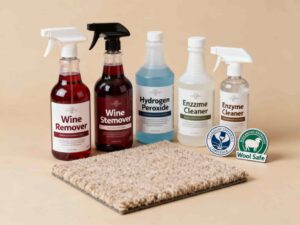
Products containing oxidizing agents (like hydrogen peroxide) break down wine pigments without affecting carpet dyes when formulated correctly. Products using enzymes (protease enzymes) can help break down the protein component of wine’s tannin-fibre bonds. Color-safe products designed for wool or delicate carpet materials are particularly effective because they’ve been tested to avoid discolouration.
When selecting a product, look for those specifically labeled for wine stain removal rather than general-purpose stain removers. Wine-specific formulas target the unique chemistry of wine pigments and tannins.
Understanding Your Carpet Type Matters
Different carpet materials respond differently to wine stains and cleaning treatments:
Wool Carpets
Natural wool fibres are highly absorbent, meaning wine penetrates deeply and quickly. However, wool’s protein structure makes it particularly responsive to enzyme-based cleaners that target protein bonds. Wool also requires gentler treatment to avoid damaging fibre texture. Test any treatment on an inconspicuous area first.
Synthetic Carpets (Polyester, Nylon)
Synthetic fibres are somewhat more stain-resistant than wool but still absorb wine readily. Synthetics are more tolerant of stronger treatments but require careful drying to prevent moisture damage. Synthetics respond well to oxidizing agents and commercial stain removers.
Carpet Blends
Most residential carpets are blends combining natural and synthetic fibres, creating variable responsiveness to different treatments. When unsure which treatment to use, start with gentler methods and progress to stronger treatments only if initial attempts fail.
Professional Carpet Cleaning for Wine Stains
Certain situations warrant professional intervention beyond DIY capability.
When to Call Professionals
Old or deeply set stains: If wine stains have existed for weeks or months, professional equipment reaches contamination layers that surface treatments cannot access.
Large spillage areas: Extensive wine spills affecting large carpet areas require professional hot water extraction equipment and commercial-grade solutions beyond typical home supplies.
Repeated unsuccessful treatment: If you’ve tried multiple DIY methods without success, professional cleaners can apply specialist treatments and advanced equipment.
Delicate or valuable carpets: Antique rugs, wool oriental carpets, or expensive specialty carpets benefit from professional expertise in preserving their integrity while removing stains.
Urgency: For events, inspections, or time-sensitive situations, professional same-day service ensures rapid, expert response.
What Professional Cleaners Can Do
Professional carpet cleaners employ several advantages over DIY efforts:
Specialized equipment: Hot water extraction machines apply heated solution under pressure, reaching stain contamination in padding and subflooring beyond surface reach. UV detection identifies all stained areas, including those invisible to the naked eye.
Commercial-grade products: Professional-only stain removers contain higher concentrations of active ingredients and specialized tannin-removal compounds unavailable to consumers. These products target wine pigments specifically and often include both oxidizing and reducing agents for stubborn stains.
Expertise: Experience identifying carpet type, fabric content, and dye stability guides appropriate treatment selection. Professional judgment determines when retreatment is possible versus when permanent staining has occurred.
In Brisbane, professional wine stain removal typically costs AU$60-100 per affected area, making it a worthwhile investment compared to carpet replacement costs that can exceed AU$2000 for large areas.
Preventing Future Wine Stains
Proactive prevention reduces future stress and carpet damage.
Carpet Protector Treatments
Professional stain protector treatments create an invisible chemical barrier on carpet fibres. This coating repels liquids, including wine, slowing absorption and giving you more time for cleanup. The barrier typically lasts 6-24 months before requiring reapplication.
Protector treatments don’t make carpets unstainable—wine can still stain protected carpets—but they do provide crucial extra minutes for cleanup before staining occurs. They’re particularly worthwhile in high-risk areas like dining rooms or entertainment spaces.
Smart Serving Practices
Simple behavioural changes dramatically reduce wine-related incidents. Keep wine glasses away from carpeted areas when possible. Use spill-resistant cups with lids or coasters for beverages. Establish designated drinking zones on hard flooring rather than carpet.
Immediate Cleanup Supplies
Keep emergency stain-removal supplies readily accessible: white paper towels or cloths, salt, cold water, and a commercial stain remover. Proximity to cleanup supplies enables faster response when accidents occur.
Regular Professional Maintenance
Schedule professional carpet cleaning every 12-18 months. Regular deep cleaning removes accumulated debris and refreshes carpet protection treatments, maintaining stain resistance and extending carpet life.
Health and Safety Considerations With Wine-Stained Carpets
Beyond aesthetics, unaddressed wine stains pose health concerns:
Wine spills introduce moisture into carpet and padding, creating conditions where bacteria and mold can flourish. This microbial growth can exacerbate allergies, asthma, and respiratory issues. The moisture environment also attracts dust mites and other microscopic organisms.
Stained carpets also accumulate other contaminants in the stained area—dirt, bacteria, and allergens concentrate around damaged fibres. Complete stain removal addresses both cosmetic and health concerns.
How The Expert Cleaners Can Restore Your Carpet
At The Expert Cleaners, we specialize in professional wine stain removal for Brisbane homes and businesses. Our proven expertise with stubborn stains, combined with advanced equipment and commercial-grade solutions, restores carpets to their original condition.
Our Wine Stain Removal Process
Our technicians begin by identifying all wine damage using UV detection technology, ensuring no hidden stains are missed. We assess your specific carpet type and fibre content to determine the most effective treatment approach. We apply targeted, professional-grade stain removal solutions specifically formulated for wine pigment and tannin elimination. We use state-of-the-art hot water extraction to remove stain residue and all treatment chemicals, leaving your carpet clean and fresh.
Our Comprehensive Cleaning Services
Carpet Cleaning Brisbane – Professional hot water extraction removes wine stains, food residue, allergens, and odours while extending carpet life.
Rug Cleaning Brisbane – Specialized care for oriental rugs, wool rugs, and delicate floor coverings affected by wine or other spills.
Couch Cleaning Brisbane – Wine spills on upholstered furniture receive expert treatment that removes stains without damaging fabric.
Flood Damage Restoration Brisbane – For extensive wine-related or other liquid damage requiring comprehensive restoration.
Curtain Cleaning Brisbane – Professional cleaning for wine-stained curtains and drapes.
Why Choose The Expert Cleaners
We’re committed to eco-friendly, pet-safe cleaning solutions that eliminate stains without harming your family or environment. Our same-day emergency service ensures rapid response to urgent wine spills. We guarantee satisfaction with stain removal results or we’ll retreat the area at no additional charge.
Contact The Expert Cleaners Today:
- Phone: 0435 071 625
- Email: info.theexpertcleaner@gmail.com
- Website: The Expert Cleaners – Brisbane Cleaning Services
- Book Your Wine Stain Removal Service
We serve all Brisbane suburbs with flexible scheduling and competitive pricing for wine stain removal, including emergency same-day appointments.
Conclusion
Wine stains don’t have to be permanent carpet damage. The difference between complete removal and permanent discolouration hinges on understanding wine’s chemistry, acting with speed, and using appropriate treatment methods.
Fresh spills respond remarkably well to immediate blotting, cold water dilution, and salt or vinegar treatments. Older stains require more intensive intervention—multiple treatment applications, extended dwell times, and potentially professional assistance. Professional equipment and commercial-grade solutions can remove wine stains that resist all DIY attempts.
With proper knowledge and swift action, your carpet can fully recover from wine accidents. The key is not panicking when spills occur, but calmly implementing the proven techniques outlined in this guide. Your carpet’s future depends not on whether wine spills—they inevitably will in active homes—but on how you respond when they do.
Image Descriptions for Alt Text
- Image 1 (generated_image:147): White vinegar bottle, baking soda container, and table salt arranged on cream-coloured carpet fiber, showing natural cleaning products for wine stain treatment
- Image 2 (generated_image:148): Professional carpet cleaning technician operating industrial hot water extraction equipment on deep red wine-stained area of residential carpet
Related Internal Links
- Professional Carpet Cleaning Brisbane
- How to Clean Rugs Without Damage
- Professional Couch Cleaning Brisbane
- Professional Mattress Cleaning Brisbane
- Carpet Repair Brisbane
- Curtain Cleaning Brisbane
- Contact The Expert Cleaners
- Book Cleaning Service