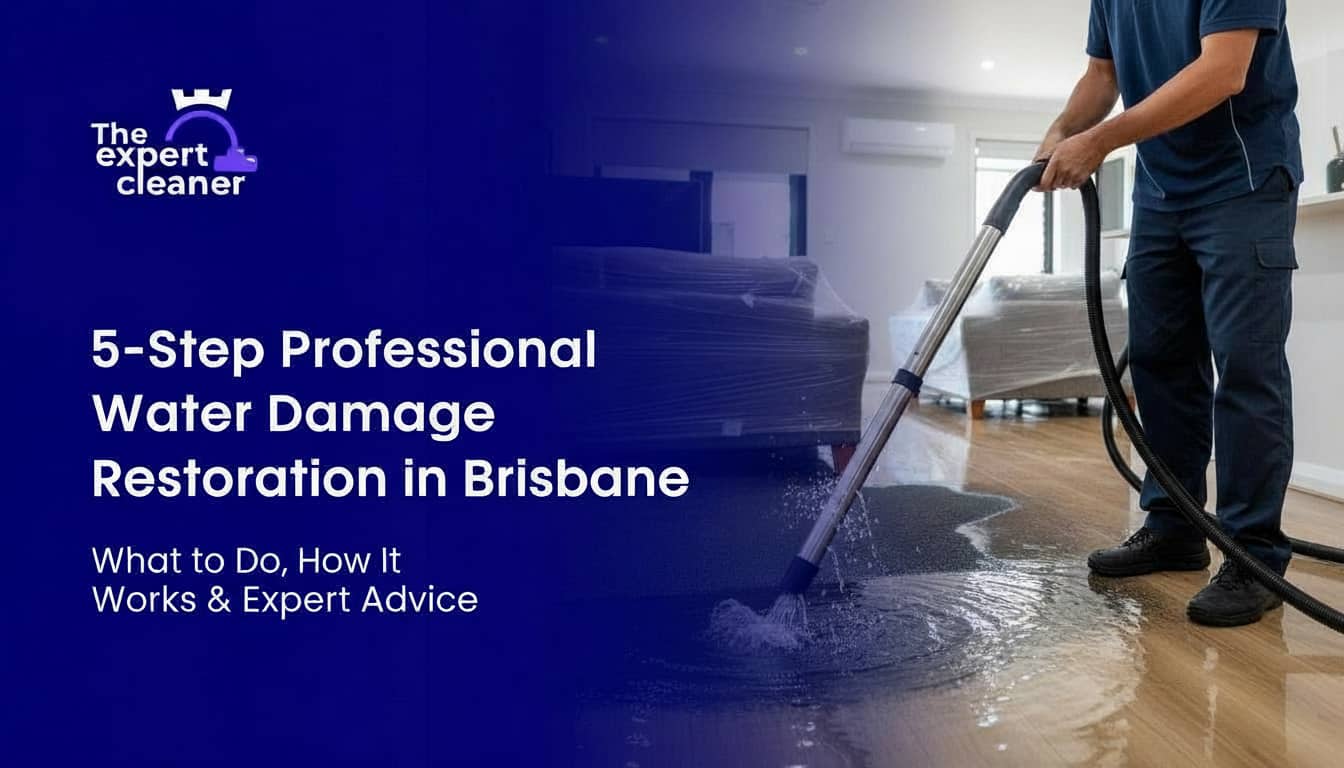
5-Step Professional Water Damage Restoration in Brisbane – What to Do, How It Works & Expert Advice
Home and business owners in Brisbane know how disruptive water damage can be. Whether it’s caused by a burst pipe, storm flooding, appliance failure, or natural disaster, fast and professional water damage restoration is crucial for protecting your property, health, and investment. Every minute counts when water invades your home or workplace—delays can cost thousands in additional repairs, mould remediation, and structural damage. In this comprehensive guide, you’ll learn the industry-proven 5-step water restoration process, get valuable prevention tips, understand insurance coverage, and find trusted resources for 24/7 emergency help. 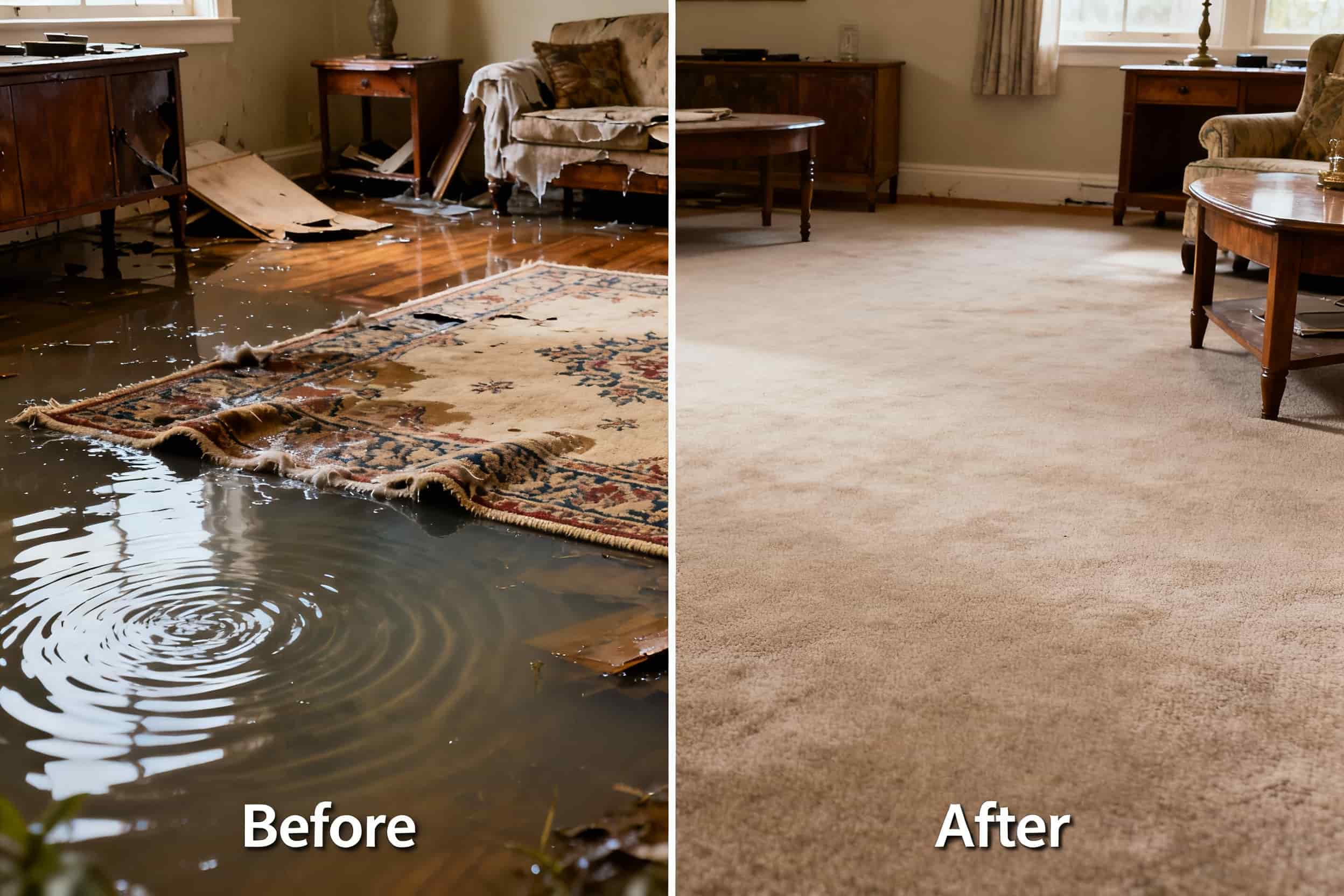
Want to get help now? Book a water damage inspection or contact our professional team 24/7 for rapid emergency response across all Brisbane suburbs.
Why Is Water Damage Restoration Important? Understanding the Real Risks
Even clean water can ruin carpets, floors, walls, furniture, and structural elements in just days if not properly addressed. Population-dense, subtropical Brisbane is especially vulnerable due to our humid climate, frequent storms, and coastal flooding risks. The high humidity levels here create ideal conditions for dangerous mould growth—colonies can begin forming in as little as 24-48 hours after water damage occurs.
Beyond visible damage, hidden moisture poses serious health and structural risks. Water absorbed into walls, under flooring, and within cavity spaces creates an invisible threat. If not professionally removed, this moisture leads to:
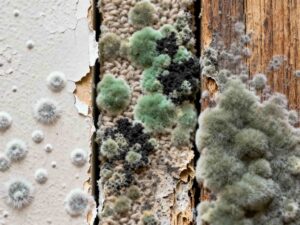
- Toxic mould colonization causing respiratory issues, allergies, and asthma
- Structural rot and weakening of timber frames, joists, and foundations
- Electrical hazards from water-damaged wiring and outlets
- Pest infestations attracted to damp environments
- Permanent staining and material loss requiring costly replacement
A comprehensive, science-backed restoration process removes all moisture, prevents dangerous mould growth, restores air quality, and ensures your property is truly safe to re-enter. Professional restoration teams use IICRC-certified methods, advanced moisture mapping, and high-powered industrial drying equipment to ensure your home or business is protected. The cost of professional restoration—while significant—is a fraction of the cost of delayed action, where mould remediation, structural replacement, or complete property loss can occur.
Water Damage Categories – Know What You’re Facing and What It Means
Understanding water damage categories is essential because they determine treatment protocols, health risks, insurance coverage, and whether materials can be salvaged or must be completely replaced. Water is classified into three distinct categories based on contamination level and source:
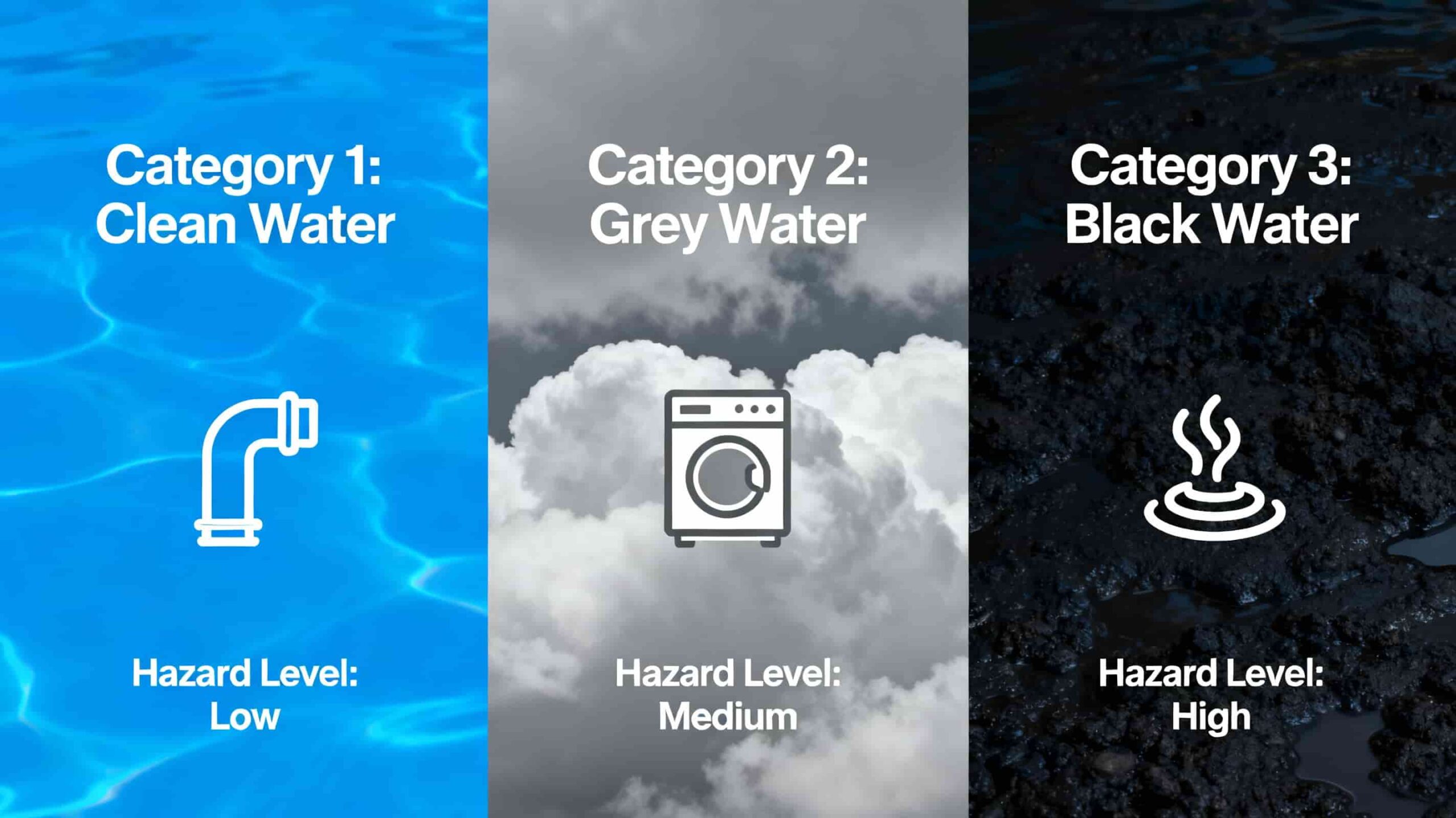
- Category 1: Clean Water (Sanitary Water)
Originates from sanitary sources like broken water supply lines, overflowing sinks, bathtubs, showers, or clean rainwater. This is the least hazardous category from a contamination perspective, but it’s still critically important to act fast. Clean water damage requires immediate extraction and professional drying to prevent mould growth, material deterioration, and secondary damage. If left untreated for more than 24-48 hours in Brisbane’s humid climate, even clean water creates ideal conditions for mould colonization and structural problems.
- Learn more: Carpet Cleaning Brisbane (General)
- Prevention tip: Expert Cleaning Tips
- Category 2: Grey Water (Significantly Contaminated)
Contains microorganisms, chemicals, and contaminants that can cause illness if contact occurs. Grey water originates from appliance overflows (dishwashers, washing machines), toilet overflows without solid waste, broken aquariums, sump pump failures, and steam from heating systems. This category requires professional cleaning with antimicrobial solutions and thorough disinfection protocols. Technicians must use protective equipment, and contaminated materials often cannot be saved. The water itself isn’t as dangerous as black water, but it still poses health risks and requires specialist treatment.
- Related: Curtain Cleaning Do’s & Don’ts
- Service: Couch Cleaning Brisbane
- Category 3: Black Water (Grossly Contaminated – Biohazard)
The most hazardous category, containing harmful bacteria, viruses, pathogens, toxins, and sewage. Black water originates from sewage backups, river flooding, storm surge, contaminated groundwater, and standing water left untreated for extended periods. This category is extremely dangerous and demands immediate specialist intervention. Affected materials typically cannot be salvaged and must be completely removed and replaced. Technicians require full biohazard protocols, including specialized protective equipment, containment procedures, and decontamination. Never attempt to clean black water damage yourself—always call certified professionals immediately.
- Details: Wikipedia: Water Damage
- Our service: Flood Damage Restoration Brisbane
- Emergency contact: Contact Us 24/7
Proper identification of water category is critical because it determines whether affected materials can be salvaged or must be removed and replaced, what cleaning solutions and disinfectants are used, what protective equipment technicians require, and how the restoration plan is structured. Misidentifying water category can lead to inadequate treatment, health hazards, and failed restoration.
The 5-Step Professional Water Damage Restoration Process Explained in Detail
The industry-standard 5-step water damage restoration process has been developed and refined by professionals following IICRC guidelines over decades. Each step is critical and must be completed thoroughly to ensure complete recovery. Understanding what happens at each stage helps you know what to expect and why professional intervention is so important.
Step 1: Emergency Inspection, Assessment, and Damage Documentation
The first 24 hours are absolutely critical. Within hours of discovering water damage, certified technicians arrive to perform a thorough emergency inspection using advanced diagnostic equipment. This step involves far more than a visual walkthrough—it’s a detailed scientific assessment using specialized tools and protocols.
Technicians use: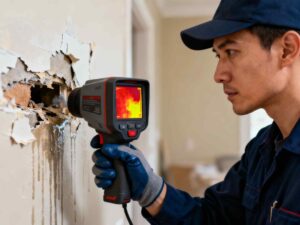
- Moisture meters and hygrometers to measure moisture content in walls, floors, carpets, and cavities
- Thermal imaging cameras to detect hidden water behind walls and in concealed spaces
- Psychrometric science to understand humidity and moisture behavior in your specific climate
- Visual inspection protocols to assess visible damage and contamination
- Documentation and photography for insurance claims and quality assurance
During this assessment phase, technicians will:
- Identify the source and category of water damage (determining risk level and treatment needs)
- Assess contamination levels and health risks to occupants
- Check moisture intrusion patterns in carpets, padding, walls, subfloors, insulation, and concealed cavities
- Determine what materials can be salvaged versus what must be discarded
- Develop a detailed, customized restoration action plan with timelines and costs
- Establish safety protocols and protective measures
- Begin documentation for insurance claims with detailed notes and photos
Early assessment is vital in minimizing damage and protecting the health and safety of your family or staff. The faster professionals assess and document, the faster recovery begins. Learn more about professional assessment techniques at Wikipedia: Disaster Restoration.
Step 2: Emergency Water Extraction and Removal
Once the assessment is complete, rapid water extraction begins. This phase is time-sensitive and must be completed as quickly as possible to prevent secondary damage, mould growth, and material deterioration. Every hour of delay increases the risk of permanent loss, especially in Brisbane’s humid environment.
Water extraction involves: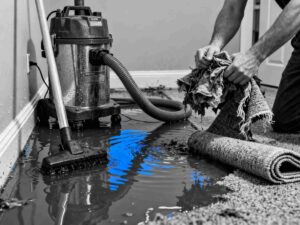
- Industrial-grade water pumps and extractors removing standing water from floors, carpets, and low areas
- Wet/dry vacuums extracting water from carpets, rugs, and soft furnishings
- Carpet lifting and water removal from padding and subfloors—padding is typically saturated and must be removed for safe disposal
- Cavity extraction using specialized equipment to remove water from wall cavities, under floors, and hard-to-reach spaces
- Moisture assessment after extraction to ensure all standing water is removed
Water extraction may take between 1 and 8+ hours depending on the severity, total volume of water, building size, and spread of damage. In severe flooding or sewage backup situations, extraction can be more complex and time-consuming. Rapid extraction saves thousands in prevented structural damage and mould remediation costs, especially in Brisbane’s humid conditions where mould can begin growing within 24-48 hours.
Explore our local services: Carpet Cleaning in Redcliffe, Northgate, Camp Hill, Wynnum, and Everton Park.
Step 3: Professional Drying and Dehumidification
After the bulk of standing water has been extracted, the drying phase begins—and this is where many property owners don’t realize how critical professional equipment becomes. This step can take 3-7 days or longer depending on climate, building structure, materials, and extent of saturation. Proper drying is absolutely essential for preventing mould and structural damage.
Industrial drying involves: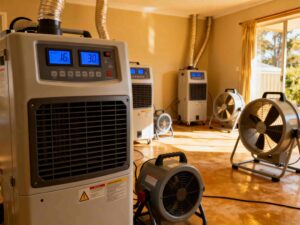
- High-powered air movers and fans positioned strategically to maintain optimal airflow and evaporation rates
- Commercial dehumidifiers removing moisture from the air—this is critical in humid climates like Brisbane where standard household dehumidifiers are insufficient
- Continuous monitoring of humidity levels and moisture content using meters and data logging equipment
- Daily equipment adjustments to maximize drying effectiveness based on real-time moisture readings
- Documentation of all drying progress for insurance companies and quality assurance
- Structural drying ensuring not just surfaces but concealed cavities and deep materials are properly dried
The drying timeline typically requires several days, with continuous monitoring and adjustment. In Brisbane’s subtropical climate with high ambient humidity, professional dehumidification is the only reliable method to achieve the low moisture levels necessary to prevent mould colonization. Standard household fans and open windows are insufficient in our climate—they can actually trap moisture in walls and cavities.
Professional drying prevents mould colonization and structural rot that would otherwise make your property unsafe and uninhabitable. Related service: All Cleaning Services.
Step 4: Professional Cleaning, Sanitization, and Deodorization
After drying, affected areas are thoroughly cleaned, sanitized, and deodorized based on the water contamination category. This phase is essential for health, safety, and restoring your property to a livable condition.
Cleaning and sanitization protocols vary by water category: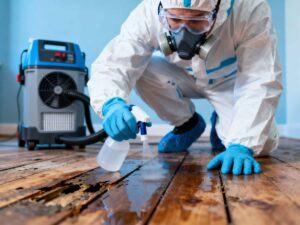
- Clean water damage: General professional cleaning to remove residues, prevent bacteria and mould growth, and eliminate odours. Antimicrobial treatments are applied to prevent colonization.
- Grey water damage: Professional sanitizing agents and antimicrobial treatments are applied to all affected surfaces. Hard surfaces are disinfected with hospital-grade cleaners, and soft furnishings are treated or replaced as needed. Special attention is given to preventing bacterial and fungal growth.
- Black water damage: Complete removal and replacement of contaminated materials, followed by comprehensive biohazard cleaning. All porous materials (drywall, insulation, padding) that contacted black water are typically discarded. Hard surfaces undergo deep decontamination with approved biohazard protocols. This phase may take significantly longer than other categories.
Technicians use HEPA air scrubbers, antimicrobial solutions, industrial-strength disinfectants, and advanced odour elimination treatments as needed. All salvageable contents are thoroughly cleaned before return to service—furniture, electronics, documents, and personal items are handled with care.
For soft-surface care, see: Couch Cleaning Brisbane, Mattress Cleaning Brisbane, and Rug Cleaning Brisbane.
Step 5: Restoration, Reconstruction, and Final Quality Inspection
The final step involves restoring and rebuilding any damaged portions of your property to return it to pre-loss condition—or sometimes even better. This phase transforms your space from a water-damaged property back into a safe, comfortable home or business.
Restoration and reconstruction typically includes:
- Repairs to drywall, plasterboard, and wall systems that were damaged or removed during restoration
- Flooring replacement (carpet, vinyl, laminate, timber) if original flooring was damaged beyond repair
- Cabinetry and built-in repairs or replacement if water caused structural damage
- Paint and finish work to restore walls and trim to original appearance
- Structural repairs if water damage affected timber framing, joists, or foundations
- Electrical system inspection and repair to ensure safety after water exposure
- Final walkthrough and post-restoration inspection for quality assurance and client approval
- Detailed documentation and certification of work completed, confirming restoration meets industry standards
Complete documentation and insurance support are provided throughout the entire process, ensuring you can recover quickly and safely. Professional restoration teams coordinate with insurance adjusters, manage documentation, and handle all technical details so you can focus on your family or business.
See our Carpet Repair in Brisbane service or Carpet Burn Repair Guide for specialized restoration options.
Brisbane Water Damage Restoration – Frequently Asked Questions
How fast do I need to act after water damage occurs?
Time is absolutely critical. Mould can begin to grow in as little as 24-48 hours after water damage (Wikipedia: Mold). Beyond mould, every hour of delay allows more water to penetrate deeper into walls, floors, and structural elements. The longer water sits, the more damage spreads, the more materials are lost, and the higher your final costs.
Act immediately upon discovering water damage:
- Call professional water damage restoration services within the first hour if possible
- Turn off electricity to affected areas to prevent electrical hazards
- Shut off the water source if the damage is from a burst pipe or leak
- Document all visible damage with photos and notes for your insurance provider
- Remove valuables and important documents from affected areas if safe to do so
- Open windows for ventilation if weather permits (but don’t rely on this alone)
Every minute of delay increases the risk of permanent loss, health hazards, and escalating costs. Professional restoration companies offer 24/7 emergency response because they understand the time-critical nature of water damage.
Will my insurance cover water damage restoration?
Insurance coverage depends on your specific policy and the source of water damage. Generally:
- Sudden, accidental damage is usually covered—such as burst pipes, appliance failures, or broken water supply lines. These are typically covered under standard home or business insurance policies.
- Flooding may not be covered under standard policies. Most homeowner and business insurance excludes flood damage from external sources (rivers, storm surge, heavy rain). You may need separate flood insurance through your insurer or the National Flood Insurance Program.
- Gradual leaks or lack of maintenance are typically not covered—such as slow roof leaks or neglected plumbing that eventually fails.
- Sewer backup coverage is optional—many policies exclude this, but you can often purchase it as an add-on.
Coverage varies significantly by policy and insurer. Contact your insurance agent to understand your specific coverage. Always document damage with photos, dates, and detailed notes for your claim. Professional restoration companies provide thorough documentation that supports insurance claims. See our Flood Damage Restoration page for more information.
How long does complete water damage restoration take?
Most water damage restoration jobs are completed within 2-7 days for the core restoration phases (extraction, drying, cleaning). Major structural repairs or complete reconstruction may take 2-4 weeks or longer depending on:
- Total volume of water and severity of damage
- Contamination category (clean water is faster than black water)
- Building size and layout
- Types of materials affected (timber takes longer to dry than concrete)
- Weather and humidity conditions
- Extent of reconstruction needed (simple drying vs. full renovation)
- Insurance approval timelines for repairs
Professional teams work efficiently and maintain continuous drying equipment to minimize downtime. Early intervention and rapid response typically reduce total restoration time significantly.
Can I claim deductible costs, and how much will restoration cost?
Costs vary widely based on damage severity, water volume, and required repairs. Typical factors affecting cost include:
- Square footage affected
- Water category (black water requires more specialized treatment)
- Materials damaged (carpet, drywall, timber)
- Extent of structural damage
- Geographic location and accessibility
- Time required for equipment deployment
Your insurance deductible (typically $500-$2,500) applies to your claim. Professional restoration companies work with insurance adjusters to maximize coverage and minimize your out-of-pocket costs. Get a detailed written quote before work begins.
Water Damage Prevention and Mould Control Tips for Brisbane Homes
Prevention is always better than restoration. Proactive maintenance and awareness can help you avoid expensive water damage:
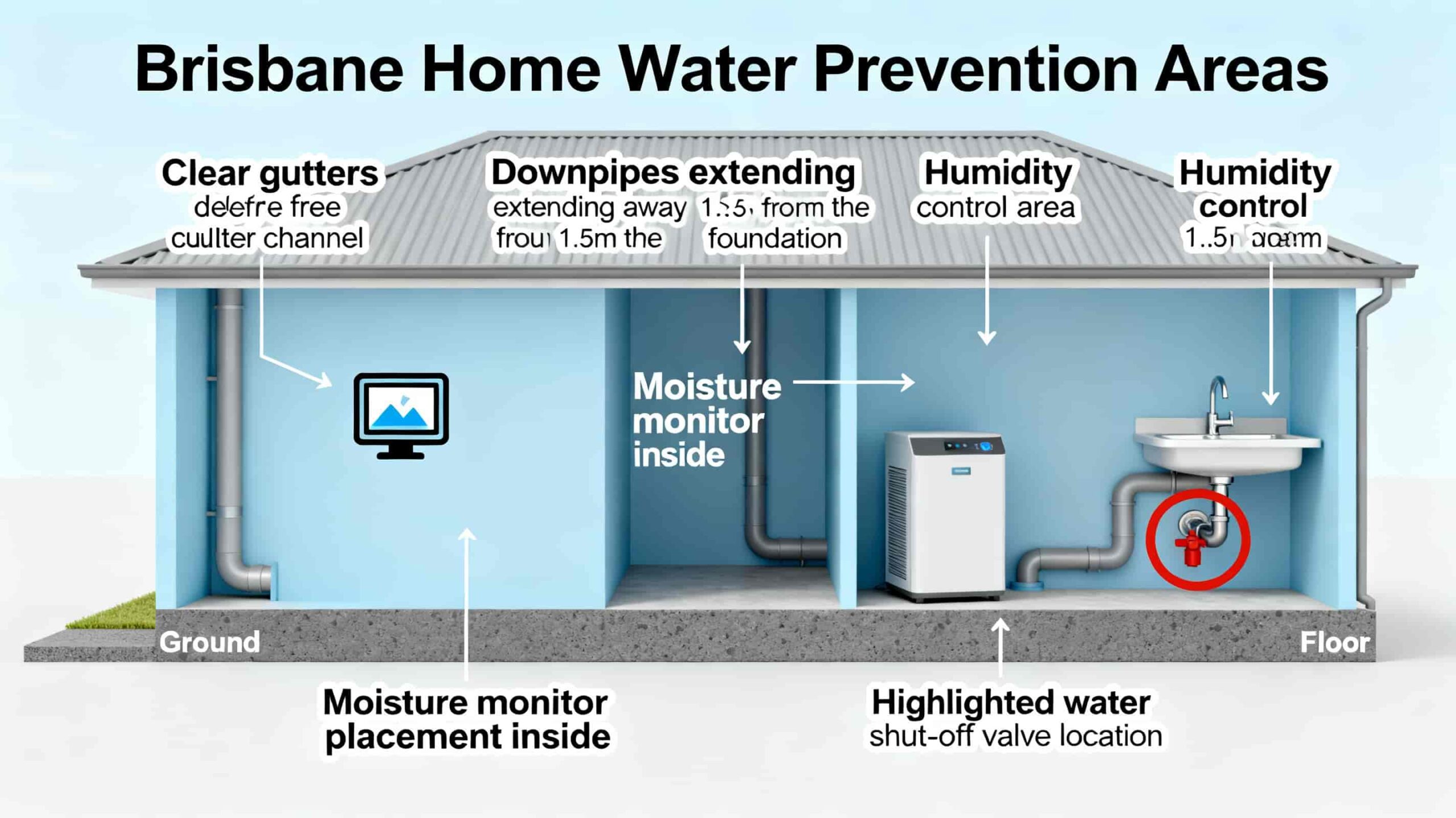
- Fix plumbing leaks immediately and schedule regular professional inspections of your plumbing system, roof, and gutters. Small leaks become major problems quickly.
- Keep gutters, drains, and downpipes clear of leaves and debris to prevent water backup and overflow. See our General Cleaning Tips.
- Install moisture monitors in basements, crawl spaces, or low areas prone to water intrusion to catch problems early.
- Maintain indoor humidity below 50% when possible to prevent mould growth. Dehumidifiers in Brisbane’s humid climate are essential during summer months.
- Direct water away from your foundation by ensuring downpipes extend at least 1-2 metres away from the building.
- Inspect outdoor areas regularly for signs of water pooling or poor drainage around your property.
- Service your air conditioning and plumbing regularly to prevent unexpected failures.
- Know the location of your main water shut-off valve so you can stop water flow immediately in an emergency.
- See Steam Carpet Cleaning FAQ for further advice on maintaining your home’s surfaces.

For expert mattress and allergen prevention tips (related to mould and moisture control), check our Mattress Cleaning Brisbane service.
Why Choose Professional Restoration Over DIY Attempts?
While the temptation to handle water damage yourself might seem cost-saving, professional restoration is almost always the better choice:
- Professionals have specialized equipment that home owners don’t possess—industrial dehumidifiers, moisture meters, thermal imaging, and extraction equipment.
- They understand building science and moisture dynamics—knowing where moisture migrates, how long materials take to dry, and what hidden damage might develop.
- They’re certified and insured—IICRC certification ensures they follow industry standards and best practices.
- They can identify contamination levels and determine whether materials can be salvaged or must be replaced.
- They prevent health hazards—mould, bacteria, and pathogens are handled safely with proper protocols.
- They handle insurance claims—documentation and coordination with adjusters ensures maximum coverage.
- DIY attempts often fail—incomplete drying leads to hidden mould growth that only becomes apparent months later, requiring expensive remediation.
The cost of professional restoration is far less than the cost of discovering hidden mould problems 6 months later.
Brisbane Water Damage Restoration – Our Comprehensive Service Offerings
Our professional team provides complete water damage restoration services across all Brisbane suburbs and surrounding areas. We specialize in emergency response, rapid extraction, professional drying, decontamination, and full reconstruction. Our services include:
- 24/7 Emergency Response – We arrive rapidly to assess and begin extraction immediately
- All Water Damage Categories – We handle clean water, grey water, and black water/sewage situations safely
- Flood Damage Restoration – Specialized services for storm flooding and river overflow damage
- Carpet and Flooring Restoration – Professional drying, cleaning, and replacement of damaged carpets and hard flooring
- Furniture and Soft Surface Cleaning – See Couch Cleaning, Mattress Cleaning, and Rug Cleaning Services
- Structural Drying and Decontamination – Ensuring walls, cavities, and structural elements are safe
- Insurance Coordination – We work directly with your insurance company for smooth claims
- Content Cleaning and Restoration – Salvaging and cleaning belongings affected by water damage
Service Coverage Areas in Brisbane and Surrounding Regions
We provide emergency water damage restoration throughout Brisbane and all suburbs, including:
No matter where you are in Brisbane, our professional team can reach you for emergency water damage restoration.
Need Fast Help? Contact Our Brisbane Experts
Don’t wait if water damage strikes your home or business. Every hour counts. Book emergency water damage restoration anywhere in Brisbane right now, or contact our professional team 24/7 for immediate assistance.
Explore our full range of services for residential and commercial clients. Curious about how we work? Explore our Gallery showcasing real before-and-after results, and read recent success stories. Learn more About Us.
Conclusion: Act Fast and Protect Your Property
Professional water damage restoration is absolutely critical for Brisbane homes and businesses. Our subtropical climate, high humidity, and frequent storm risk create perfect conditions for rapid damage escalation and mould growth. Fast response, expert assessment, and advanced drying methods can prevent health hazards, catastrophic repair costs, and permanent property loss.
When water damage strikes, don’t hesitate—every minute counts. Contact a certified professional immediately at the first sign of water damage, and stay safe!
Ready to protect your home or business? Visit our Home Page, book emergency restoration now, or contact our team for 24/7 emergency help.